Understanding the Problem
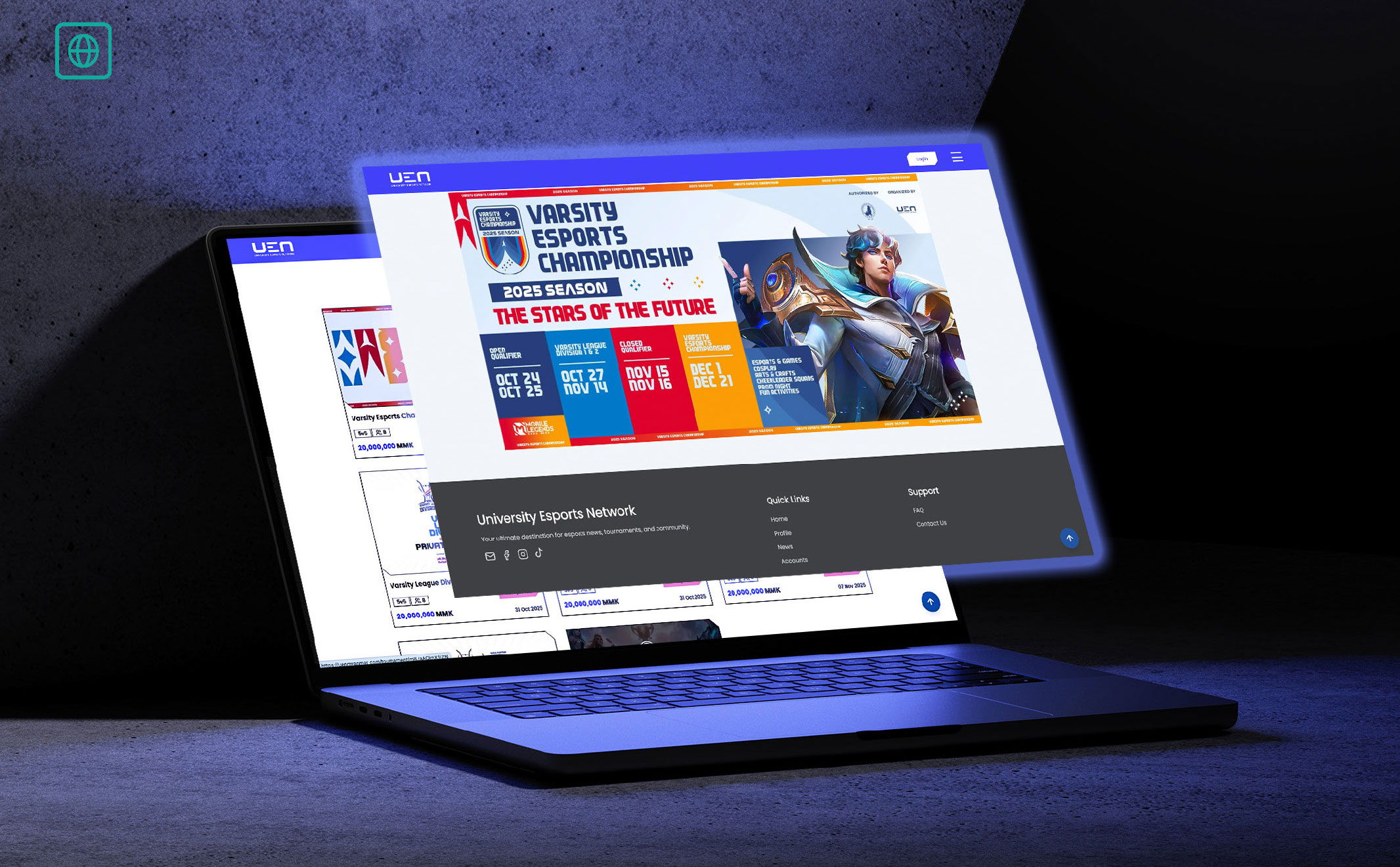
When HOG approached us to develop the UEN (University Esports Network) platform, the goal was clear. This was not just about building another tournament system. It was about creating continuity, a foundation for something that could grow year after year.
We quickly realized that while tournaments were happening, the system behind them was still very basic.
There was no structured player database. Performance data like kills, match results, and contributions were not recorded in a meaningful way. Organizers had no visibility beyond final results. And most importantly, there was no long-term record that could support player development or national-level selection.
Every new tournament started from zero.
Shaping the Vision
We envisioned something bigger than a typical event platform.
The UEN web portal would act as a central ecosystem where players could register using verified university profiles, competitions could be managed seamlessly, and every match could generate valuable data.
This data is not just for record-keeping, it becomes a foundation for identifying talent.
By capturing detailed performance metrics, the platform allows organizers and stakeholders to track player progress over time. It becomes easier to see who is consistently performing, who is improving, and who has the potential to move to the next level.
In other words, the platform supports not just tournaments — but the future of esports talent development.
The Challenges Behind the Build
Like many custom platforms, the journey was not without its challenges.
One of the first hurdles was structuring the data. Esports is dynamic, every game has different mechanics, different metrics, and different ways to measure performance. Designing a flexible system that could capture meaningful statistics without becoming overly complex required careful planning.
Another challenge was identity verification. Since this was built specifically for universities, we needed to ensure that players were genuinely representing their institutions. Balancing security with a smooth user experience became an important consideration.
Performance was also critical. During tournaments, the system needed to handle real-time updates, match results, player statistics, and rankings, without delays. This pushed us to optimize both backend processing and database structure.
And then there was usability.
The platform had to serve multiple user groups: players, organizers, and administrators. Each had different needs, and creating an interface that felt simple for everyone required multiple iterations and constant refinement.